How to Relocate Your Office Without Downtime: A 30-Day Checklist for Growing Teams

At some point, every growing company faces the same moment. The office that felt just right eighteen months ago is suddenly too small. Desks are crammed together, meeting rooms are overbooked, and your newest hires are working from hallways or home because there is simply nowhere else to put them.
You know you need to move. But the thought of relocating your office while keeping the business alive and productive stops many teams in their tracks.
The good news is that learning how to relocate your office without downtime is less about luck and more about timing and planning. Teams that pull off smooth office moves share one common habit: they start earlier than they think they need to and treat the relocation like a project, not an afterthought.
This guide lays out a realistic 30-day checklist for relocating your office without downtime, built specifically for growing teams juggling an active workload at the same time.
Why Office Relocations Go Wrong
Before jumping into the checklist, it is worth understanding why so many office moves create more chaos than they should.
The most common culprit is compressed timelines. Teams decide to move and then try to pack everything into two or three weeks, which means decisions get rushed, vendors get booked late, and IT infrastructure ends up in chaos on moving day.
The second problem is unclear ownership. When everyone is loosely responsible for the move, nobody is actually responsible for it. Tasks get duplicated or forgotten entirely, and the move date arrives with half a dozen open items nobody addressed.
Third, growing teams often underestimate how deeply an office move affects their clients and partners. Phone numbers ring to disconnected lines. Email auto-replies reference old addresses. A client shows up to your previous office for a scheduled meeting because nobody updated the company’s Google listing. These small oversights compound quickly into reputation and revenue problems.
The fix for all three of these issues is the same: a clear timeline, a named owner, and a checklist that covers every layer of the move, from physical logistics to digital presence.
The 30-Day Office Relocation Checklist
This framework divides the month into four phases. Each phase has its own focus so your team can move deliberately without everything colliding at once. Think of it as a relay race rather than a sprint where everyone runs at the same time.
Phase 1 • Days 1–7 |
| Foundation: Assign, Audit, and Plan |
|
|
|
|
|
|
|
|
The goal of this first week is to get out of your head and onto paper. Many teams skip the inventory step and pay for it later when they realize they moved three broken monitors and left behind the standing desk that cost a fortune. Clarity at this stage saves time and money in every phase that follows.
Phase 2 • Days 8–14 |
| Communication: Tell Everyone Before They Ask |
|
|
|
|
|
|
|
|
The teams that relocate without losing a single billable hour are the ones who over-communicate. They tell clients twice, update their address in every system, and leave no room for confusion.
Phase 3 • Days 15–21 |
| Infrastructure: Set Up the New Space Before You Arrive |
|
|
|
|
|
|
|
|
Tip: IT first, always. The single biggest cause of productivity loss during an office move is internet and phone downtime. Schedule connectivity setup at your new office at least three to five business days before the team moves in. Test it yourself before your team shows up expecting to work.
One of the smartest ways to relocate your office without downtime during this phase is to consider a temporary flexible workspace. If there is any gap between your old lease ending and your new space being fully ready, booking a coworking space for even one or two weeks keeps your team working at full capacity. This is far cheaper than the lost productivity of sending everyone home to work in isolation.
Phase 4 • Days 22–28 |
| Execution: Move in Stages, Not All at Once |
|
|
|
|
|
|
|
|
Phase 5 • Days 29–30 |
| Review: Close the Loop and Fix What Broke |
|
|
|
|
|
|
What Growing Teams Often Overlook
A 30-day checklist covers the mechanics of the move. But there are a few less obvious factors that separate a good office relocation from a great one.

Your team’s emotional experience of the move
Office moves create real anxiety for a lot of employees. Longer commutes, unfamiliar neighbourhoods, or just the stress of change can cause a temporary dip in morale. Acknowledging this openly, sharing the reasoning behind the move, and involving team members in decisions about the new space layout makes a measurable difference in how quickly people settle in and get back to full productivity.
Your brand’s physical presence
The new office is often the first thing clients, candidates, and investors see when they visit you. Think carefully about how the space reflects your company’s identity. A well-chosen coworking space or serviced office in a premium location can instantly communicate growth and professionalism without the cost of a full fit-out.
The total cost of the move
Teams often budget for the obvious costs: movers, new furniture, and lease deposits. What catches many companies off guard is the cost of downtime itself. If your team loses even one full working day during the move, multiply that by your average daily revenue or billing rate and you will quickly see why investing in a proper 30-day plan is worth every hour it takes.
Staggered versus simultaneous moves
Moving the entire company on one day feels efficient but rarely is. Staggering the move by department, floor, or team means you always have some capacity running even as the physical transition happens. Client calls get answered. Emails go out. Deadlines are met. This is one of the most practical ways to relocate your office without downtime regardless of the size of your team.
The Flexible Workspace Advantage for Relocating Teams
There is a growing reason why growing businesses in Vietnam are turning to coworking spaces both as interim solutions during a move and as a permanent home once the dust settles.
A well-run coworking space offers everything a traditional office provides, plus a speed and flexibility that conventional leases simply cannot match.
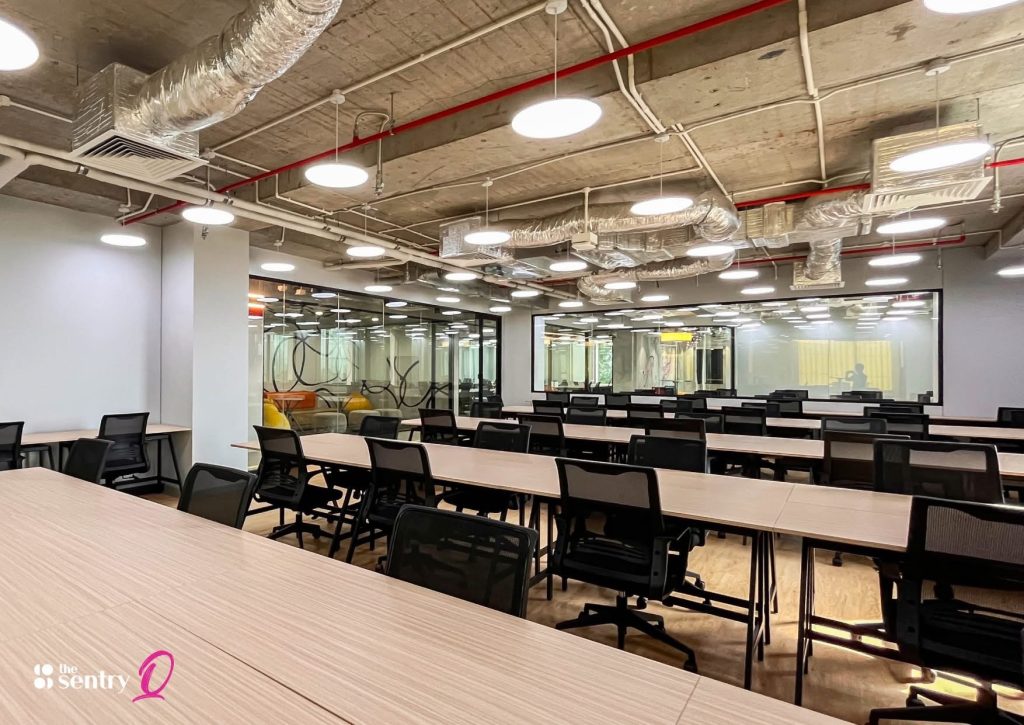
When you choose a coworking space instead of a standalone office, you eliminate a significant chunk of the relocation complexity. There is no need to coordinate internet installation, arrange furniture delivery, or negotiate with a fit-out contractor. You show up to a fully functioning workspace with high-speed internet, meeting rooms, dedicated desks, and private offices all ready to go. For a team in the middle of a move, this removes weeks of logistical friction.
Coworking spaces also allow teams to right-size their space in real time. If your company grows from fifteen to thirty people faster than expected, a good coworking provider can scale your allocation without requiring you to break a long-term lease. This is a real advantage for teams in high-growth phases who are not yet certain of their headcount six months from now.
The bottom line is this: if you are planning how to relocate your office without downtime, a flexible coworking space in a prime location is worth serious consideration, whether as a bridge during your move or as your new permanent base.
Before You Move: A Few Final Checks
Once your checklist is complete and your team is settling into the new space, run through these final items to make sure everything is truly closed out.
Confirm that your business insurance policy reflects the new address. Many companies forget this and spend months at a new location without realising their coverage is tied to an address they no longer occupy.
Update your business cards, letterheads, invoices, and any printed materials that carry your address. These are often the last things on anyone’s list and the ones that create the most embarrassing moments when they surface months later.
Finally, walk the new space with fresh eyes after the team has settled in for a week. You will spot ergonomic issues, lighting problems, and workflow bottlenecks that were invisible during the move itself. Addressing these in the first two weeks sets the tone for a productive and happy team long after the boxes are unpacked.
Relocating your office does not have to mean a week of chaos, unanswered calls, and stressed-out employees. With a 30-day plan, the right partners, and a clear owner for every task, your team can move to a better space and keep performing at the level your clients expect throughout the entire process.
Your Next Office in Ho Chi Minh City Is Already Waiting
The Sentry is Vietnam’s leading Grade A coworking and flexible office provider, with premium locations across Ho Chi Minh City in District 1, District 2, and District 12.
Whether your team needs a fully furnished private office, a dedicated floor, or a hot-desk setup to bridge the gap during your move, The Sentry has a space that fits.
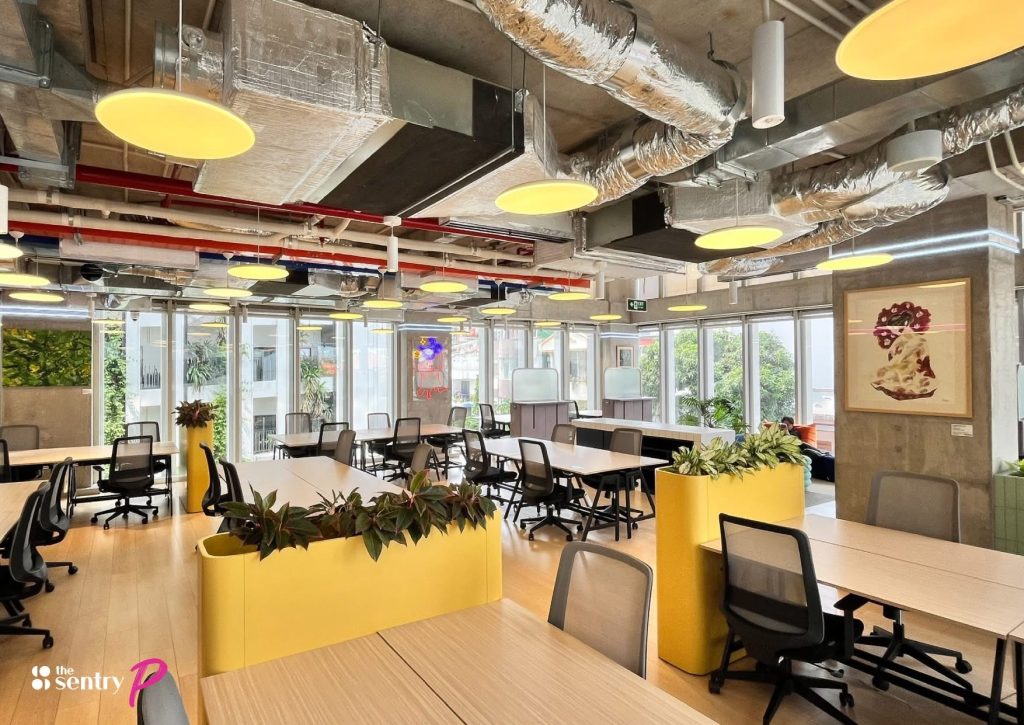
From The Sentry Z’s Lotus Gold-certified eco-design in District 1, to The Sentry P’s artistic creative hub in District 2, to The Sentry Q’s tech campus near Tan Son Nhat International Airport, every location comes ready with high-speed internet, modern meeting rooms, event spaces, and a thriving community of startups, investors, and tech professionals.
No fit-out delays. No infrastructure headaches. Just a professional space your team can walk into and start working from day one.
Book a Tour Today at The Sentry!
YOU MAY BE ALSO INTERESTED IN

Branch Office vs Representative Office in Vietnam: Which Should Foreign Companies Choose?
Foreign companies entering Vietnam usually run into the same question early on. Do you register a representative office or a branch office? The two structures look alike at first glance. Both let a foreign company operate under Vietnamese law without setting up a fully separate local entity. The similarities stop there once you look at […]

Best Coworking Spaces in District 2 & Thao Dien (2026)
District 2 and Thao Dien have become the go-to base for founders, freelancers, and remote teams who want a workspace close to where they actually live. The area sits across the river from downtown Saigon, but Metro Line 1 and a fast-growing business scene have turned it into a work hub in its own right. This […]

How Much Does a Serviced Office Cost in Ho Chi Minh City? 2026 Pricing Guide
Shopping for office space in Ho Chi Minh City usually comes down to one question: what is this actually going to cost? The answer depends on what kind of serviced office you pick, but most businesses end up paying somewhere between 1,500,000 VND and 15,000,000 VND per person each month. A hot desk sits at […]

Interested in this location?
Complete the form below to book a tour or connect with one of our team members to find out more.