Branch Office vs Representative Office in Vietnam: Which Should Foreign Companies Choose?

Foreign companies entering Vietnam usually run into the same question early on. Do you register a representative office or a branch office? The two structures look alike at first glance. Both let a foreign company operate under Vietnamese law without setting up a fully separate local entity. The similarities stop there once you look at what each one is actually allowed to do, how much paperwork it takes, and how the tax office treats it.
What Is a Representative Office in Vietnam?

A representative office, usually shortened to RO, is the lighter of the two structures. It gives a foreign company a legal presence in Vietnam for the sole purpose of supporting its parent company. It cannot sign sales contracts, issue invoices, or collect payment for goods and services.
Vietnamese commercial law draws a firm line between representing a business and running one, and Ho Chi Minh City’s own trade and investment portal lays out exactly where that line sits for foreign trading entities.
What an RO Can Do
- Conduct market research and feasibility studies
- Promote the parent company’s products or services
- Build relationships with local suppliers, distributors, or clients
- Monitor and support contracts the parent company has already signed
- Hire local and foreign staff for administrative and liaison roles
What an RO Cannot Do
- Sign commercial contracts in its own name
- Issue invoices or collect revenue inside Vietnam
- Import or export goods directly
- Pay corporate income tax, since it has no taxable income
- Run for-profit activities of any kind
If your plan in Vietnam involves selling anything at all, a representative office will not get you there on its own.
>>> Read more: Representative Office Compliance in Vietnam
What Is a Branch Office in Vietnam?

A branch office sits a step higher on the ladder. It still depends on the foreign parent legally, but it can run actual business operations inside Vietnam, within whatever scope the parent’s home license allows. That extra scope is why trading, banking, and legal service companies tend to reach for a branch instead of an RO.
A branch can sign contracts, invoice clients, and generate revenue under its own name, though Vietnamese law limits branches to a short list of regulated sectors.
What a Branch Can Do
- Sign and carry out commercial contracts
- Generate revenue and issue invoices
- Import and export goods tied to its licensed activities
- Open bank accounts in Vietnamese dong and foreign currency
- Remit profits back to the parent company abroad
Which Sectors Typically Use a Branch
- Banking and finance
- Insurance
- Law firms
- Tourism and travel services
- A short list of other regulated industries where the law permits foreign branches
Vietnam only opens the branch route to a short list of regulated sectors, mainly banking, insurance, law, and a few others. Companies outside those sectors that want to trade directly in Vietnam usually end up forming a local limited liability company instead, since a branch license is simply not available to them.
Main Differences Between Branch Office vs Representative Office in Vietnam
Once you line the two structures up side by side, the practical differences stand out fast. The table below covers the areas that matter most when a foreign company is choosing between them, and a closer legal breakdown of both structures goes further into the compliance side if you want the fuller picture.
|
Factor |
Representative Office |
Branch Office |
| Legal status | No independent legal personality | Partial legal personality within licensed scope |
| Can sign contracts | No | Yes, within licensed scope |
| Can generate revenue | No | Yes |
| Tax obligations | Not subject to corporate income tax | Subject to corporate income tax, VAT, and full accounting |
| Staffing scope | Admin and support roles only | Sales, marketing, operations, and support roles |
| Available sectors | Open to most foreign traders | Limited to select regulated sectors |
| Governing regulation | Decree 07/2016/ND-CP | Decree 07/2016/ND-CP plus sector-specific law |
Representative offices sit outside the corporate income tax net since they generate no income, though they still carry minimal reporting duties. Branches file corporate income tax, value added tax, and full accounting and audit records, the same way a Vietnamese company would.
Both structures answer to the ITPC’s guidance for foreign business entities on licensing and reporting.
Legal Liability and Parent Company Responsibility
Neither structure counts as a separate legal person under Vietnamese law.
Both the RO and the branch operate as extensions of the foreign parent, so the parent carries the legal and financial responsibility for whatever happens on the ground in Vietnam. A branch takes on more direct exposure since it can sign contracts and build up obligations tied to those agreements, but the parent still stands behind everything in the end.
This matters when you decide how much operational freedom to hand your Vietnam office, since more freedom for a branch also means more direct risk sitting back home with the parent.
Setting Up: Documents, Process, and Timeline
The application paperwork is where the two structures diverge the most. An RO dossier is built around proving your parent company is real, financially sound, and has traded internationally for at least a year. A branch dossier has to prove all of that too, plus a five-year track record, and then justify the specific activities you plan to run in Vietnam.
Documents you will need:
- For a Representative Office:
- Application form for RO establishment
- Parent company’s business registration certificate, notarized, legalized, and translated
- Audited financial statements or a bank confirmation of financial standing
- Proof the parent company has traded internationally for at least 1 year
- Passport and CV of the proposed chief representative
- Lease agreement or proof of address for the RO location
- For a Branch:
- Application form for branch establishment, filed under Decree 07/2016/ND-CP
- Parent company’s business registration certificate, notarized, legalized, and translated
- Proof the parent company has operated for at least 5 years
- Audited financial statements for the most recent fiscal year
- Appointment letter for the head of the branch
- Proposed office lease contract in Vietnam
- A description of business activities that matches the parent company’s licensed scope
Setup time follows the same pattern. This comparison of the two paths notes that a branch generally takes longer to license than an RO, mainly because of the extra documentation and the sector-specific approvals some branches need on top of the standard dossier.
Tax and Financial Obligations
Tax treatment is one of the clearest ways to tell the two structures apart.
RO Tax Duties
- No corporate income tax, since the RO earns no revenue
- Registration for a tax code shortly after the establishment license is granted
- Withholding and payment of personal income tax for the chief representative and staff
- Periodic operational reports submitted to the licensing authority
Vietnam also dropped the annual business license fee for representative offices starting January 1, 2026, which cut one recurring cost off the RO compliance calendar.
Branch Tax Duties
- Corporate income tax on Vietnam-sourced profit
- Registration for VAT and any other tax tied to its licensed activities
- Full accounting records and audits, the same as a local company
- Personal income tax withholding for staff, same as an RO
ASL Gate’s summary of tax obligations for both structures makes the gap in reporting workload easy to see side by side.
Staffing and Hiring Considerations

Both structures let you hire Vietnamese and foreign staff, though the roles differ. An RO builds a small team for liaison and administrative work, since it cannot sell anything. A branch has room to hire for sales, marketing, and other revenue-facing roles that match its wider scope.
Foreign hires on either side still need a work permit and the right visa category.
Local hiring follows Vietnam’s Labor Code regardless of which structure you pick, covering contracts, insurance contributions, and termination rules for every employee on the payroll
>>> Read more: Vietnam Labor Law Basics for Foreign Companies (2026)
Which One Should Your Company Choose?
The decision usually comes down to one question. Does your Vietnam presence need to sell something, sign something, or invoice someone?
If the answer is no, a representative office covers what you need at a lower cost and with a lighter compliance load. If the answer is yes, you are looking at either a branch, where the sector allows it, or a fully incorporated local company.
A detailed breakdown on how to weigh a company, representative office, or branch against your actual business activity is a useful gut check before you file anything.
Choose a Representative Office If…
- You are still researching whether Vietnam is the right market
- You need a liaison presence to support distributors or customers, without billing them directly
- Your parent company already sells into Vietnam through a local distributor or agent
- You want a lower-cost, lower-risk way to build local relationships first
Choose a Branch Office If…
- Your sector is one of the few where branch licensing is actually available
- You need to sign contracts, issue invoices, and collect revenue under the parent company’s name
- You are prepared to take on full tax, accounting, and audit obligations in Vietnam
- Your hiring plans go beyond admin support and into sales, service delivery, or operations roles
Once your team grows past a handful of admin staff, hiring rules for foreign employees and local labor contracts start to matter a lot more.
>>> Read more: Vietnam Labor Law Basics for Foreign Companies
Choosing a Base in Ho Chi Minh City

Whichever structure you register, the license application needs a real, verifiable office address in Vietnam. Ho Chi Minh City remains the most common starting point for foreign companies, thanks to its concentration of banks, notary offices, and licensing authorities that process these applications daily.
A serviced or virtual office in a well-run building can meet that address requirement while keeping upfront costs low during the early stage, and gives you a place to shift into a full private office once the branch or RO is up and running.
>>> Read more: How to Set Up a Virtual Office in Vietnam for Founders and Growing Teams
Get Your Vietnam Office Sorted at The Sentry
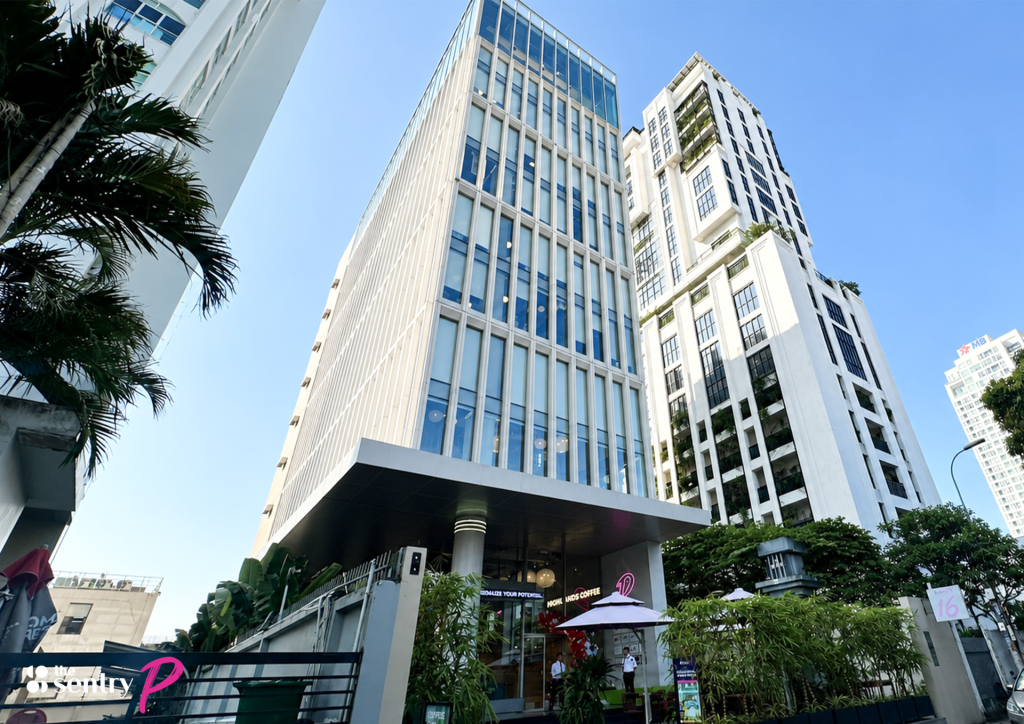
At The Sentry, we host foreign companies at every stage of their Vietnam setup, from a first representative office to a fully licensed branch.
Our coworking desks, private offices, virtual office packages, and meeting rooms in Ho Chi Minh City give your team a real, registered address along with the room to meet partners and grow the headcount when the time comes.
Book a tour today and see which setup fits your plan.
YOU MAY BE ALSO INTERESTED IN

Branch Office vs Representative Office in Vietnam: Which Should Foreign Companies Choose?
Foreign companies entering Vietnam usually run into the same question early on. Do you register a representative office or a branch office? The two structures look alike at first glance. Both let a foreign company operate under Vietnamese law without setting up a fully separate local entity. The similarities stop there once you look at […]

Best Coworking Spaces in District 2 & Thao Dien (2026)
District 2 and Thao Dien have become the go-to base for founders, freelancers, and remote teams who want a workspace close to where they actually live. The area sits across the river from downtown Saigon, but Metro Line 1 and a fast-growing business scene have turned it into a work hub in its own right. This […]

How Much Does a Serviced Office Cost in Ho Chi Minh City? 2026 Pricing Guide
Shopping for office space in Ho Chi Minh City usually comes down to one question: what is this actually going to cost? The answer depends on what kind of serviced office you pick, but most businesses end up paying somewhere between 1,500,000 VND and 15,000,000 VND per person each month. A hot desk sits at […]

Interested in this location?
Complete the form below to book a tour or connect with one of our team members to find out more.