The way people work has changed more in the last five years than it did in the previous two decades. Remote work, hybrid schedules, and distributed teams have become the norm for companies across every industry. And as the traditional office lost its grip, a new kind of working environment stepped in to fill the gap: the shared workspace. But what actually changes when a team makes that move? The answer turns out to be more wide-reaching than most teams expect.
Whether you are a growing startup, a team of freelancers coordinating on a shared project, or an established company exploring flexible options, understanding what shifts when you move into a shared workspace can help you make the most of it from day one.
The concept is broader than most people initially assume, and understanding its full scope is the first step toward using it well.
The Core Idea
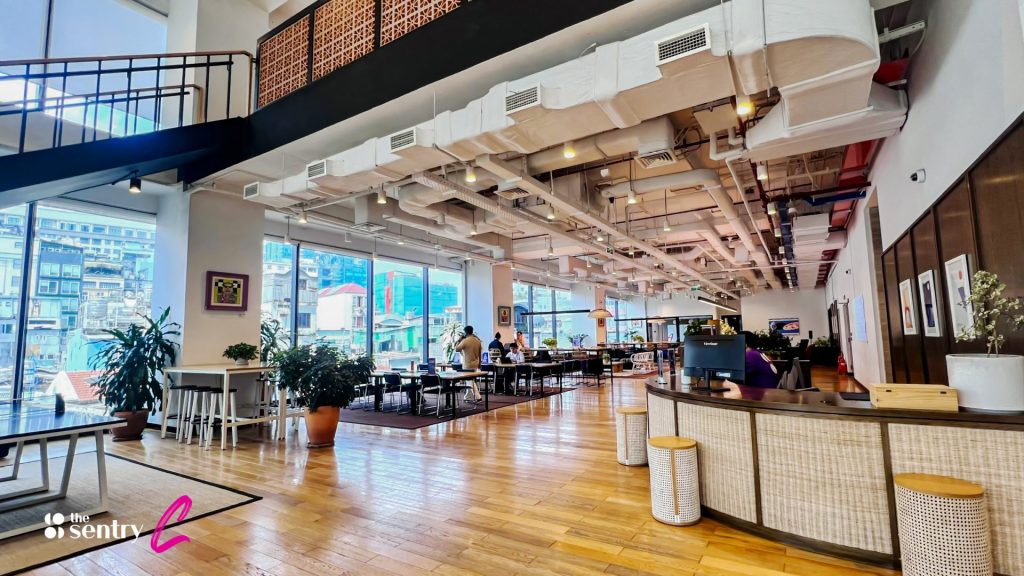
A shared workspace is a professional environment used by multiple individuals or businesses, either simultaneously or on a rotating basis across different time slots. It occupies a practical middle ground between working from home and renting a traditional private office. Teams get the structure, amenities, and professional atmosphere of a real workplace without the long-term lease, full fit-out costs, or facility management obligations that come with a dedicated building or floor.
At its core, a shared workspace is any arrangement where people share the physical or digital infrastructure needed to work effectively. This can mean anything from a single hot desk in an open-plan room to a fully serviced private office within a larger building used by dozens of other companies. The workspace itself remains consistent; what rotates is who uses it, when, and how.
Shared workspaces are used by a wide range of professionals, and that diversity is part of what makes them work.
Freelancers and independent consultants use them to maintain a professional environment a few days a week without committing to a fixed lease.
Startups use them to get their teams into a proper working environment before the business is generating enough revenue to justify a dedicated space.
Remote employees whose companies do not provide an office use them as a reliable alternative to working from home.
And established businesses use them to house satellite teams, host client meetings, or test a presence in a new city before making a longer-term commitment.
Within the broader shared workspace category, there are four recurring formats that appear across most markets, including Ho Chi Minh City. Each addresses a different combination of how people work and how much real-time interaction their work requires. Most modern teams end up using more than one at once.
Physical and Collaborative
Physical and collaborative spaces are the most immediately recognisable format. These are open-plan environments where teams or individuals from different organisations work side by side, share resources, and interact throughout the day. They are excellent for fostering energy, encouraging spontaneous conversation, and reducing the isolation that often accompanies remote work. Many startups use these spaces in their early stages because the collaborative atmosphere accelerates both productivity and relationship-building at a time when both matter most.
Physical and shared spaces operate more like a time-share. Different individuals use the same desk or room at different points in the day or week, with no expectation of real-time collaboration. The workspace itself stays constant while the people using it rotate. This format suits remote workers who need a professional setting a few days a week, consultants who spend most of their time on-site with clients, and anyone who wants a reliable alternative to working from home without the cost of a permanent address.
Virtual and Collaborative
Virtual and collaborative spaces have grown considerably in relevance since hybrid and remote models became standard. These are digital environments where geographically distributed team members work together in real time through video calls, shared whiteboards, cloud-based documents, and project management platforms. The workspace is digital rather than physical, but the collaborative dynamic is identical to an in-person setting. Many hybrid teams rely on a combination of physical and virtual collaborative tools to keep both on-site and remote members equally connected and informed.
Virtual and shared spaces are the most asynchronous of the four formats. Think of a shared Google Drive, a collaborative document, or a project board where different people contribute at different times without any expectation of simultaneous presence. This format is particularly common in remote-first organisations where team members operate across time zones and need a shared infrastructure without a shared schedule. It is less a workspace in the physical sense and more a shared system that keeps the team’s work coordinated and accessible.
Six Things That Actually Change When Teams Make the Switch
Moving into a shared workspace is not simply a change of address. The environment reshapes how teams communicate, how they approach their work, and how they experience the working day. The changes tend to be gradual at first and then increasingly noticeable as the team settles in. These are the six shifts that most teams report feeling most clearly.
Team Culture Shifts Noticeably
In a traditional office, culture is largely self-contained. It is shaped by the company’s own people, leadership, and internal dynamics.
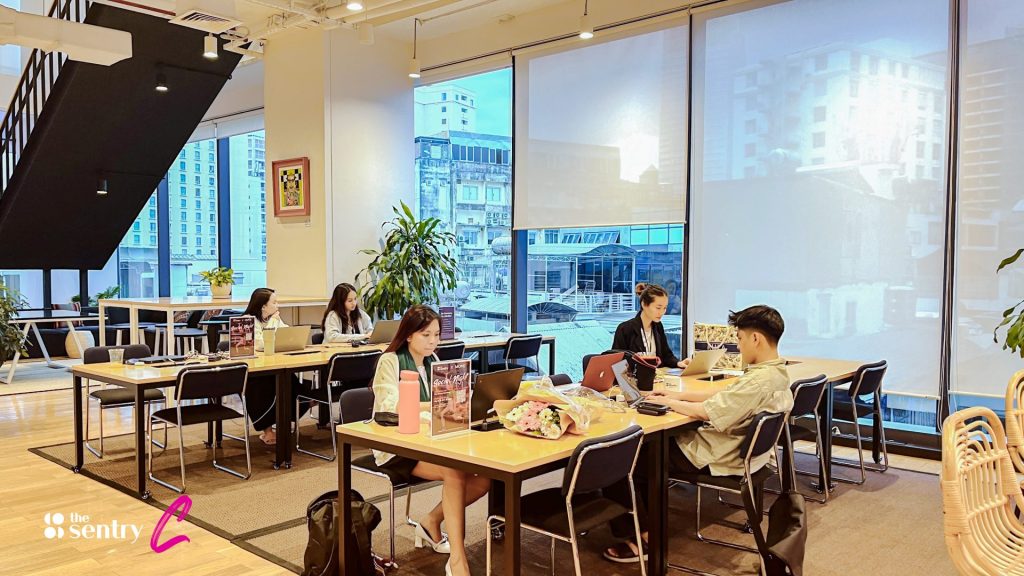
In a shared workspace, the environment introduces an outside layer of energy that a private office simply cannot manufacture on its own. Being surrounded by professionals from different industries and backgrounds creates a subtle but powerful shift in mindset.
Teams become more open to new ideas, more aware of how other people solve problems, and more motivated by the ambient drive of the people around them.
Access to diverse perspectives is consistently cited as one of the most valuable and least expected benefits of working in a shared environment. Culture in a shared workspace is built not just in planned team meetings, but in hallway conversations, shared coffee queues, and the general energy of a room where people genuinely care about their work.
Collaboration Stops Being Something You Schedule
In a standard office, collaboration often requires effort: booking a room, sending calendar invites, aligning schedules. When teams move into a shared workspace, collaboration starts happening more organically.
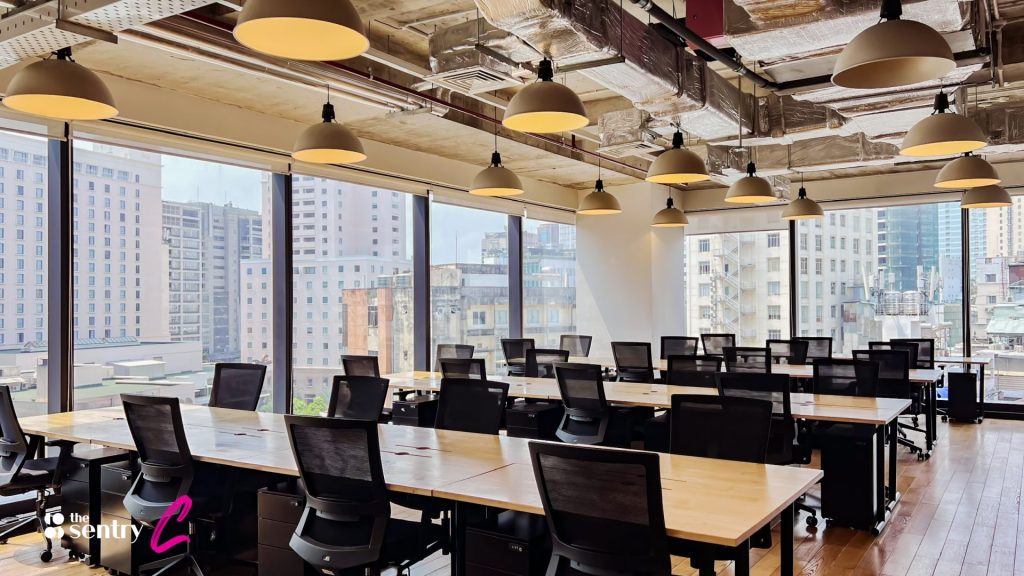
Open layouts, flexible furniture, and a mix of quiet zones and social areas make it easier for team members to work closely together, solve problems on the spot, and discuss ideas as they arise.
According to a Gensler study on workplace design, 79 percent of employees say that having different workspace options is essential for their productivity, and shared workspaces are built on exactly that principle.
Teams that previously communicated mostly over messaging apps often find that the move into a shared environment significantly reduces friction and shortens the time between idea and action.

Overhead Costs Change Dramatically
A traditional private office comes with a long list of fixed costs that exist whether the space is fully used or not. Rent, utilities, internet, furniture, cleaning, maintenance, and equipment all accumulate before a single productive hour is logged. A shared workspace restructures this entirely.
Teams pay for what they actually use, and most providers bundle services into a single fee that covers high-speed internet, meeting rooms, printing, and cleaning.
By sharing reception, cleaning, and IT support, businesses free up significant administrative time and capital that can be redirected toward growth, hiring, or product development.
For startups and small businesses operating in Ho Chi Minh City, where Grade A coworking desks are priced at a fraction of traditional prime real estate, this financial restructuring can be the difference between sustainable growth and unsustainable overhead.
Flexibility Replaces Rigid Office Routines
Fixed offices tend to create fixed routines. Everyone arrives at roughly the same time, occupies the same desk, and follows the same weekly rhythm.
A shared workspace introduces a different kind of structure, one that bends to what the team actually needs on a given day rather than what the lease dictates.
Teams can scale up or down depending on project demands. Employees can move between collaborative areas and quiet zones throughout the day based on what their work requires, which leads to better focus and more consistent output.
This kind of spatial flexibility is especially important in a hybrid model, where paying for a half-empty office on the days most people work from home is no longer a defensible use of budget.
Productivity Gets a Measurable Lift
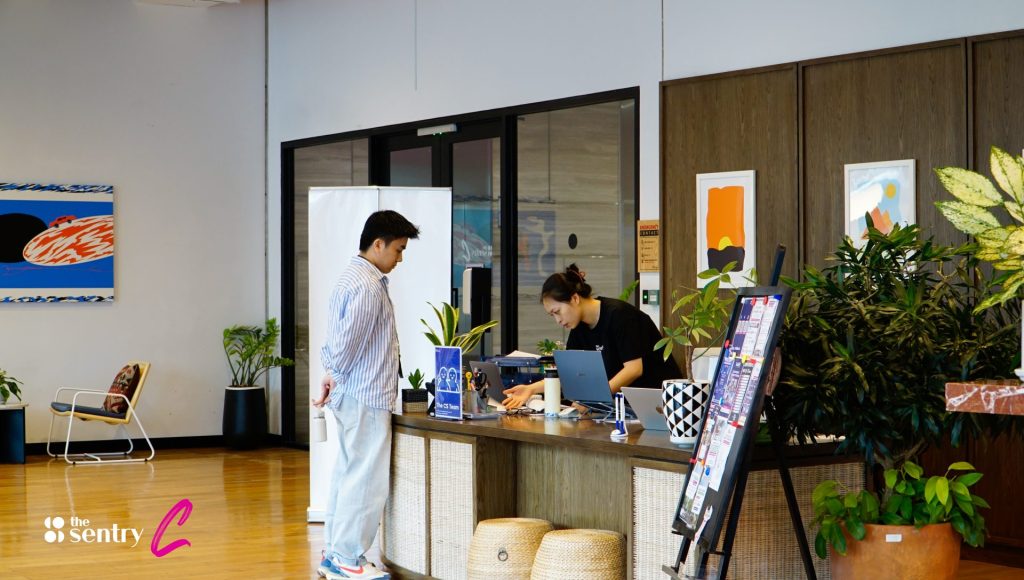
The connection between environment and output is well documented. Research shows that 69 percent of people who use coworking spaces report being more productive compared to working from a home office or coffee shop.
The combination of a professional setting, reliable tools, and fewer home-related distractions makes a consistent difference. Shared workspaces are designed with productivity in mind in ways that a typical private office often is not: ergonomic furniture, natural light, high-speed connectivity, acoustic zones for focused work, and private meeting rooms are all standard features.
There is also a motivational dimension to working around other driven professionals. The ambient energy of a room full of people engaged in purposeful work can elevate focus and reduce the low-level disengagement that often creeps in when teams work in isolation.
Employee Satisfaction and Wellbeing Improve
Remote work brought genuine benefits, but it also created a well-documented problem: isolation. Research conducted during and after the pandemic consistently showed that the absence of social contact was a significant source of dissatisfaction among remote workers.
At a certain point, the novelty of working from home wore off, and the need for direct exchange and physical proximity became urgent for many people.
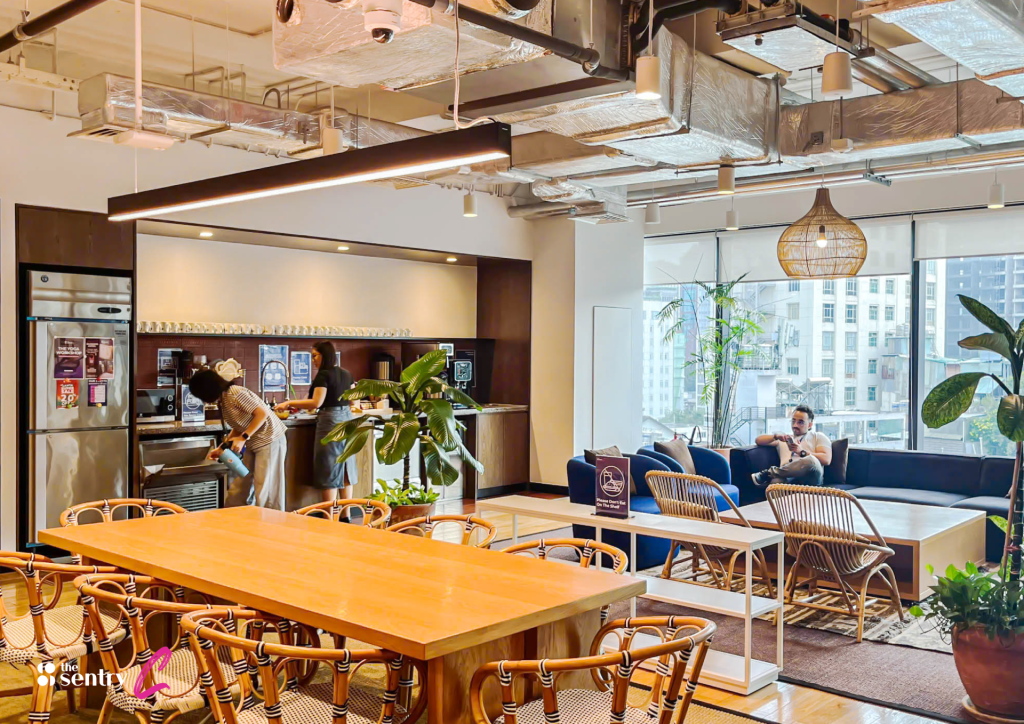
Shared workspaces address this directly. They offer a sense of community that a home office cannot replicate. Professionals from different companies interact daily, creating an organic network of connections that benefits everyone involved. Many shared workspace providers also run events, workshops, and social gatherings that deepen this community further.
For teams, the result is better morale, stronger interpersonal relationships, and lower rates of disengagement. Employees gain a reason to show up that goes beyond their task list, and the shared workspace becomes a place they actively want to be in rather than one they feel obligated to attend.
Not every shared workspace suits every team, and the wrong choice can limit rather than support the way people work. The right decision depends on team size, the nature of the work, the frequency of on-site collaboration, and how much privacy the team’s day-to-day activities require.
For Solo Workers and Freelancers
A standard coworking membership with access to a hot desk and shared amenities is usually enough. The professional environment, reliable internet, and surrounding community deliver everything a home office lacks without the cost of a dedicated space. The flexibility to come and go as needed makes this the most practical and cost-effective option for individuals who work independently but want to do so in a motivated, professional setting.
For Small Teams
A private office within a larger shared facility offers the best of both worlds: the infrastructure and community of a coworking environment combined with the focus and privacy of a dedicated room. Teams can collaborate without noise complaints, host clients without embarrassment, and still benefit from the amenities and social atmosphere of the wider building. This is the format that most growing startups and small agencies find works best once they have four or more people working together regularly.
For Larger Companies and Hybrid Teams
A shared office space provides the scale and full-service amenities of a traditional workplace without the commitment of a standalone lease. Larger teams can take entire floors or wings within a shared building, giving them the privacy and space of a corporate office while still benefiting from shared services, flexible terms, and the option to scale up or down as the business evolves. In a city like Ho Chi Minh City, where the coworking market is expanding rapidly and workspace trends continue to evolve, this format is increasingly the choice of multinational teams setting up regional presences without the overhead of a traditional fit-out.
The Shift Is About More Than Just Space
When teams switch to a shared workspace, the change is never purely physical. The move touches how people communicate, how they approach collaboration, how much they enjoy coming to work, and how efficiently the business operates as a whole.
Culture, costs, productivity, flexibility, and wellbeing do not shift in isolation. They move together, reinforcing one another in ways that a change of furniture or a new floor plan in a traditional office simply cannot replicate.
A team that is more collaborative is also more motivated. A team that is more motivated is also more productive. A team that is not weighed down by fixed overhead has more freedom to invest in the things that actually drive growth.
For many teams, the move to a shared workspace is the point at which work starts to feel genuinely sustainable again. The structure exists without the rigidity. The community exists without the distractions. The costs align with actual usage rather than fixed obligations. And the environment adapts to the team rather than requiring the team to adapt to the environment.
That combination is exactly why the shared workspace model has moved from a niche alternative into the mainstream way that modern teams choose to operate. It is not a compromise. It is a better fit for the way work actually happens now.
Ready to experience the difference for yourself?
The Sentry offers premium coworking and shared office solutions across multiple locations in Ho Chi Minh City, designed for teams and individuals who want a professional, well-equipped, and community-driven place to work. From private offices and meeting rooms to open coworking areas and event spaces, The Sentry brings together everything a modern team needs under one roof.
YOU MAY BE ALSO INTERESTED IN

Branch Office vs Representative Office in Vietnam: Which Should Foreign Companies Choose?
Foreign companies entering Vietnam usually run into the same question early on. Do you register a representative office or a branch office? The two structures look alike at first glance. Both let a foreign company operate under Vietnamese law without setting up a fully separate local entity. The similarities stop there once you look at […]
Best Coworking Spaces in District 2 & Thao Dien (2026)
District 2 and Thao Dien have become the go-to base for founders, freelancers, and remote teams who want a workspace close to where they actually live. The area sits across the river from downtown Saigon, but Metro Line 1 and a fast-growing business scene have turned it into a work hub in its own right. This […]
How Much Does a Serviced Office Cost in Ho Chi Minh City? 2026 Pricing Guide
Shopping for office space in Ho Chi Minh City usually comes down to one question: what is this actually going to cost? The answer depends on what kind of serviced office you pick, but most businesses end up paying somewhere between 1,500,000 VND and 15,000,000 VND per person each month. A hot desk sits at […]

Interested in this location?
Complete the form below to book a tour or connect with one of our team members to find out more.