How to Set Up a Branch Office in Vietnam: Requirements, Procedures & Timeline (2026)

To set up a branch office in Vietnam, your parent company needs at least five years of operating history, business activities that Vietnam has opened to foreign companies, and a real office address in the province where the branch will operate. Once the application file is complete, the licensing authority reviews it within about seven working days. Preparing documents abroad and finishing the post-licence steps usually stretch the whole process to two or three months.
A branch lets a foreign company sign contracts, issue invoices and earn revenue in Vietnam under the parent’s own name. That makes it a popular route for banks, insurers, law firms and consultancies that want to serve local clients directly.
What a Branch Office in Vietnam Can Do
A branch is a dependent unit of the foreign parent company. It carries the parent’s name, works within the scope written on its licence and relies on the parent for legal liability. Inside that scope, a branch can sign local contracts and bill customers in Vietnamese dong.
The rules come from the Commercial Law and Decree 07/2016/ND-CP, which covers both representative offices and branches of foreign traders. Many foreign companies first enter as a representative office and apply for a branch licence later. Here is how the three common entry options compare.
| Feature | Representative Office | Branch Office | Foreign-Owned Company (LLC) |
|---|---|---|---|
| Earns revenue in Vietnam | No | Yes, within its licensed scope | Yes |
| Signs commercial contracts | No, liaison and market research only | Yes | Yes |
| Parent’s minimum operating history | 1 year | 5 years | No set minimum |
| Separate legal entity | No | No | Yes |
| Who carries liability | Parent company | Parent company | The Vietnamese company |
| Licence term | Up to 5 years, renewable | Up to 5 years, renewable | Tied to the investment project term |
The branch sits in the middle of these options. It can trade in the service sectors covered by Vietnam’s market access commitments, and the parent stays fully responsible for its debts and obligations.
>>> Read more: Branch Office vs Representative Office in Vietnam: Which Should Foreign Companies Choose?
Requirements to Set Up a Branch Office in Vietnam
Vietnam sets a higher bar for branches than for representative offices. Article 8 of Decree 07 lists the conditions, and the licensing authority checks each one before it issues a licence.
Five Years of Operating History
The parent company must have operated for at least five years from its establishment or registration date. A representative office needs only one year, so younger companies often start there and upgrade once they pass the five-year mark.
At Least One Year Left on the Parent’s Registration
If the parent’s business registration certificate shows an expiry date, at least one year must remain on it on the day you submit. The branch licence itself runs for up to five years, capped at the remaining life of the parent’s registration.
Activities That Match Vietnam’s Commitments
The branch’s activities must fall within Vietnam’s market access commitments under international treaties and within the parent’s own business lines. Activities outside those commitments need approval from the relevant line ministry, which adds weeks and some uncertainty to the review.
One Branch per Province
Each foreign company can hold only one branch within a single province or centrally run city. A company with a branch in Ho Chi Minh City can still open another in Hanoi or Da Nang.
A Clean Licensing Record
The authority will refuse an application if the parent had a representative office or branch licence in Vietnam revoked within the previous two years.
Companies already running a representative office in the same city can keep it alongside the new branch or wind it down once the branch is up and running.
>>> Read more: How to Close a Representative Office in Vietnam (2026)
Documents for the Branch Licence Application
The dossier follows Article 12 of Decree 07. Most of it comes from the parent company’s home country, so it usually takes the longest to pull together. A standard file includes:
- An application form on the Ministry of Industry and Trade template, signed by the parent’s authorised representative
- A copy of the parent’s business registration certificate or an equivalent document
- A letter appointing the head of the branch, plus a copy of that person’s passport or ID card
- A copy of the parent’s audited financial statements, or a tax compliance confirmation, for the latest fiscal year
- A copy of the branch’s operating charter
- The office lease or a lease commitment, along with the landlord’s papers showing the premises can be used as an office
Documents issued abroad need consular legalisation at a Vietnamese embassy or consulate in the home country. Once they reach Vietnam, they get a certified Vietnamese translation, and copies are certified as true copies.
Tip: Book the legalisation appointment as soon as the parent’s board signs the paperwork. Embassy queues are often the slowest part of document preparation.

Step-by-Step Procedure to Set Up a Branch Office in Vietnam
The licensing authority has shifted recently. Under Decree 146/2025/ND-CP, which took effect on 1 July 2025, powers over foreign traders’ branches moved to provincial People’s Committees as part of a two-year pilot. In Ho Chi Minh City, confirm the receiving office with the city’s Department of Industry and Trade before you file. The steps themselves stay much the same.
Step 1: Check Your Activities Against the Commitments
Match each service you plan to offer to Vietnam’s WTO schedule and any trade agreement between your home country and Vietnam. A local law firm can confirm this in a short review and spare you a refused file.
Step 2: Lock In an Office Address
The application names the branch’s address, so you need a signed lease or lease commitment before filing. Serviced offices help a lot here because the operator usually has the building’s legal papers ready to hand over.
Step 3: Prepare and Legalise the Dossier
Gather the documents listed above, legalise them abroad and translate them in Vietnam. Check that names, dates and addresses match on every page. Small mismatches are one of the most common reasons for a request to fix the file.
Step 4: Submit the Application
File the dossier in person, by post or online where the authority accepts online filing. The office flags any missing items within a few working days and decides within seven working days of receiving a complete file. Applications that need a ministry’s opinion take longer.

Step 5: Make the Seal and Register for Tax
Once the licence arrives, make the branch’s seal and register for a tax code with the local tax office. The tax code lets the branch issue invoices, hire staff and file returns.
Step 6: Open a Bank Account
Open a corporate account at a bank licensed in Vietnam using the licence, seal and tax code. Banks run their own checks on the parent company, so allow one to two weeks.
Step 7: Put Up a Signboard and Start Operating
Display the branch signboard at the registered address and begin the activities on your licence. A branch that has not started operating within one year risks having its licence revoked.
Step 8: Arrange Work Permits for Foreign Staff
A foreign head of branch and any foreign employees need a work permit or a confirmed exemption before they start work. Run this in parallel with the licence so your branch head can sign documents from the first day.
>>> Read more: Vietnam Work Permit Guide for Foreigners
Branch Office Timeline and Costs in 2026
Most foreign companies can expect six to ten weeks from the start of document preparation to a working bank account. The licence review is the shortest stage. Paperwork abroad and the steps after licensing take up most of the calendar.
| Stage | Typical Time |
|---|---|
| Collecting and legalising parent documents abroad | 2 to 4 weeks |
| Translation and notarisation in Vietnam | 3 to 7 working days |
| Licence review after a complete file | About 7 working days |
| Seal production | Around 5 working days |
| Tax code registration | 5 to 7 working days |
| Bank account opening | 1 to 2 weeks |
| Work permit for a foreign branch head | Several weeks, run in parallel |
Costs to Budget For
The licence fee itself is modest. Most of the money goes on preparation, advice and the office. Plan for:
- The state fee for the branch licence
- Consular legalisation fees in the parent’s home country
- Certified translation and notarisation in Vietnam
- Legal or advisory fees if a firm files on your behalf
- Seal production
- Rent and deposit for the registered office
- Monthly accounting and tax filing services once the branch opens
What Usually Causes Delays
- Names or addresses that differ between documents
- Financial statements that are unaudited or older than the latest fiscal year
- Activities outside Vietnam’s commitments that need a ministry’s opinion
- A lease missing the landlord’s building papers
>>> Read more: How Much Does a Serviced Office Cost in Ho Chi Minh City?
Staying Compliant After Your Branch Opens
The licence gets the branch started, and regular filings keep it in good standing. These are the obligations that come up most often in the first few years.
Accounting and Tax
Branches keep books under Vietnamese accounting standards and pay corporate income tax on their Vietnam profits at the standard 20% rate. They also declare VAT on sales and withhold personal income tax for employees each month or quarter.
Annual Operation Report
Every branch sends an operation report to its licensing authority by 30 January each year. Missing it two years in a row is one of the grounds for losing the licence.
Licence Amendments and Extensions
A new branch head, a new address or a change in activities needs a licence amendment. The licence lasts up to five years, so put the extension date on the calendar well before it runs out.
Rules for the Head of Branch
The head of branch cannot also serve as head of another branch of the same parent, head of a branch of another foreign company or legal representative of a company in Vietnam. Pick someone who can give the role their full attention.
Hiring Your First Local Team
Local employees need written labour contracts, social insurance registration and payroll that follows the Labour Code. Setting this up correctly from the first hire saves back payments and penalties later.
>>> Read more: How to Hire Your First Employees in Vietnam: Labor Law Basics for Foreign Companies
Grounds for Licence Revocation
Authorities can revoke a branch licence for several reasons. The most common ones are:
- No operations within one year of licensing
- No operation reports for two consecutive years
- A required report still missing six months after its deadline
- Activities that go beyond the scope written on the licence
Choosing an Office Address for Your Branch
The licensing authority checks that your branch has a lawful place to work, and the address goes on the licence itself. A residential apartment or an informal desk with no paperwork tends to cause problems at the review stage. Before you sign anything, look for a space that offers:
- A lease that covers at least the first licence period, with clear renewal terms
- The landlord’s building papers confirming the premises can be used as an office
- An address inside the province where you plan to license the branch
- Room to add desks as your local headcount grows
- Meeting rooms for client visits, bank appointments and interviews
Serviced offices and private suites inside coworking spaces suit most new branches well. They come furnished, with internet and reception already running, and the operator can supply the documents the licensing file asks for. Location matters too. District 1 puts you close to banks, law firms and government offices, while Thao Dien and the Quang Trung Software City area attract tech and creative teams.
>>> Read more: Best Coworking Spaces in District 2 & Thao Dien (2026)
Start Your Vietnam Branch at The Sentry

At The Sentry, we give foreign companies a ready office address and the paperwork their branch application needs. Our Ho Chi Minh City locations include:
- The Sentry C at 15 Le Thanh Ton, District 1, home to tech, VC and creative firms
- The Sentry Z at 25 Nguyen Binh Khiem, District 1, Vietnam’s first sustainable flexible office
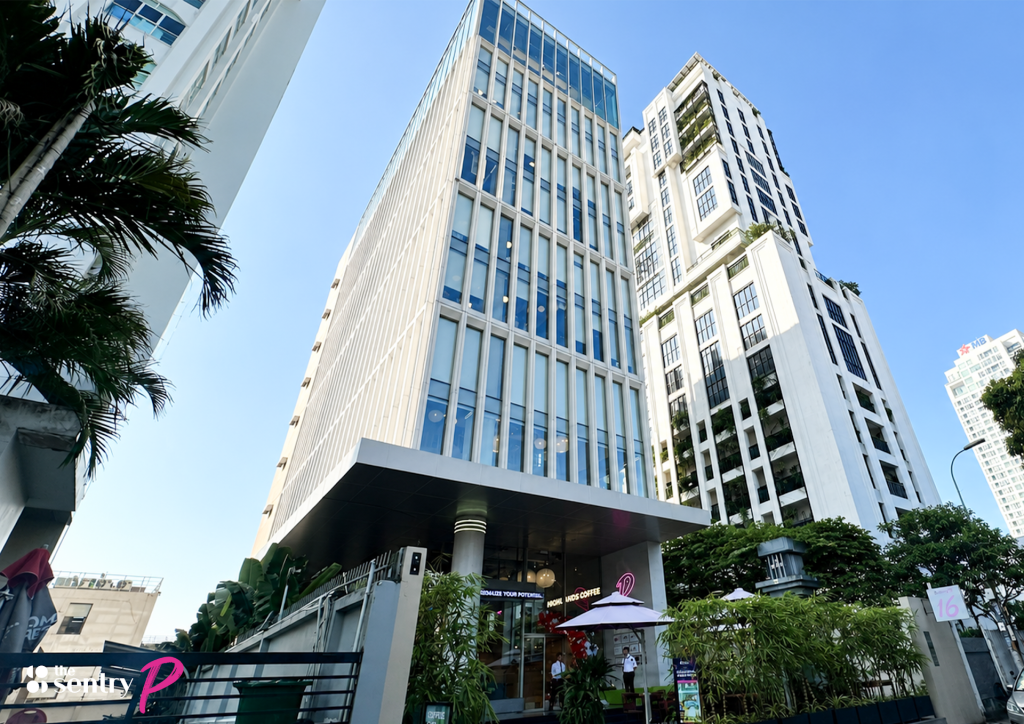
- The Sentry P at 16 Nguyen Dang Giai, Thao Dien, close to the expat community
- The Sentry Q at Orbital 2.0 in Quang Trung Software City, District 12, built for tech teams
Each space offers private offices, meeting rooms and a community of more than 70 startups and established companies.
Book a tour today and find the right home for your Vietnam branch.
YOU MAY BE ALSO INTERESTED IN

How to Open a Corporate Bank Account in Vietnam for Foreign Companies (2026)
Opening a corporate bank account in Vietnam is one of the first jobs after your company receives its Enterprise Registration Certificate. Foreign-owned companies usually need two kinds of account: a direct investment capital account (DICA) to bring in charter capital, and a regular current account in Vietnamese dong to pay staff, taxes and suppliers. With […]

How Much Does It Cost to Set Up a Company in Vietnam? Full Fee Breakdown (2026)
If you’re opening a small foreign-owned company in Vietnam, plan on spending around VND 80 to 160 million (USD 3,000 to 6,000) on fees and professional help. That gets you registered. Your charter capital, office rent and first year of accounting and audit come on top. What surprises most founders is how little the government […]
How to Set Up a Branch Office in Vietnam: Requirements, Procedures & Timeline (2026)
To set up a branch office in Vietnam, your parent company needs at least five years of operating history, business activities that Vietnam has opened to foreign companies, and a real office address in the province where the branch will operate. Once the application file is complete, the licensing authority reviews it within about seven […]

Interested in this location?
Complete the form below to book a tour or connect with one of our team members to find out more.